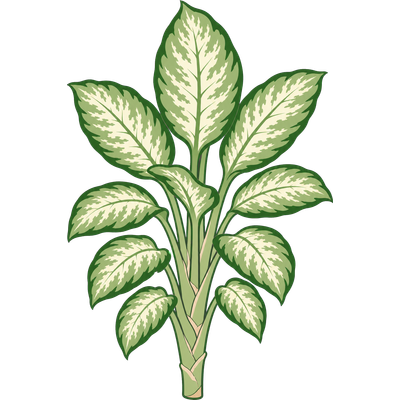
Plant Passport
Dumb Cane
Dieffenbachia seguine
LightBright
Water7-10d
PetCheck
PP DIEF FENB ACHI
Issued 2026 · Valid while cared for
Dumb Cane
Dieffenbachia
Dieffenbachia seguine
Also known as Dieffenbachia maculata, Dieffenbachia picta
“The lush showstopper with a secret — look, don't lick.”
air purifyingtropicalshade tolerant
- Light
- Medium light
- Water
- Keep lightly moist
- Pet safety
- Toxic to pets
- This month
- Continue summer care. Last good month for propagation. Prune leggy growth if needed. Watch for spider mites.
August care tip
Continue summer care. Last good month for propagation. Prune leggy growth if needed. Watch for spider mites.
Quick Care Summary
- Light
- Medium light
- Water
- Keep lightly moist
- Placement
- Bright indirect light, away from direct sun and out of reach of children and pets
- Temperature
- 16–30°C
- Humidity
- high
Free printable Plant Passport card
Print, cut, and place this Dumb Cane card in the pot. Add the physical card if you want the finished version.
Printable card preview
Compare the simple formats before you download the free card or add a finished card above.
Plant Passport
Dumb Cane
LightBright
Water7-10d

Botanical stake card
- Format
- 150 x 25mm
- Best for
- Slim plant stakes and gift pots
Use the card section above when you are ready to download or add a printed card.
Protect the printed card
Waterproof badge holders keep the free printable card readable through every watering.
View holders →Detailed Care Guide
Watering Method
Water from the top until water drains from the bottom. Allow the top 2-3cm of soil to dry before watering again. Avoid getting water on the leaves as it can leave marks on the variegated foliage. Empty the saucer after 30 minutes to prevent root rot.
Soil Mix
Well-draining but moisture-retentive mix: 60% peat-free potting soil, 20% perlite, 20% orchid bark. Must drain well but retain some moisture between waterings.
Repotting
Every 1-2 years in spring. Go up one pot size. Wear gloves when handling — the sap is irritating. If the plant has become too tall and leggy, repotting is a good opportunity to air-layer or cut back.
Pruning
Prune in spring to control height or encourage bushier growth. Cut the stem cleanly with a sharp knife. The stump will resprout. Always wear gloves and wash tools after pruning — the sap causes skin irritation.
Pot Preference
Plastic or glazed ceramic with drainage holes. A heavier pot helps with stability as the plant grows tall. Avoid terracotta if you struggle to keep soil moist — it dries too fast for Dieffenbachia.
Fertilizing
Feed every two weeks with a balanced liquid fertilizer diluted to half strength during spring and summer. Reduce to monthly in autumn. Stop fertilizing in winter. High-nitrogen fertilizer helps maintain lush foliage.
Draft Sensitivity
Very sensitive to cold drafts and sudden temperature changes. Keep away from exterior doors, single-glazed windows in winter, and air conditioning vents. Below 16°C causes leaf yellowing and drop.
Sources consulted
- www.rhs.org.uk
- www.missouribotanicalgarden.org
- www.aspca.org
Room Placement
Window Direction
East or west-facing window is ideal, providing bright indirect light. North-facing can work but growth will be slower and variegation less pronounced. South-facing needs sheer curtain or placement 1-2 metres back.
Best Room
Living room, bedroom, or bathroom with good light and consistent warmth. An office with stable temperature works well. Keep out of reach of children and pets — ideally on a high shelf or in a room they don't access.
Monthly Care Calendar
Aug (now)
Continue summer care. Last good month for propagation. Prune leggy growth if needed. Watch for spider mites.
Sep
Growth begins to slow. Reduce fertilizing to monthly. Ensure plant isn't in a drafty spot as windows start opening less.
Oct
Stop fertilizing. Reduce watering frequency. Keep away from cold windows and radiators. Check plant health before winter.
Nov
Winter mode. Water only when top soil is dry. Increase humidity as central heating dries the air. Keep above 16°C at all times.
Watering Schedule
- Summer
- Every 7 days
- Winter
- Every 12 days
Stick your finger 2-3cm into the soil. If it feels dry, water thoroughly until water drains from the bottom. If still moist, check again in a day or two.
Common Problems
Propagation
stem cuttingair layeringdivisioneasyspring
Stem cuttings: cut a 10-15cm section of stem with at least one node. Let the cut end dry for a day. Plant in moist perlite or soil mix. Keep warm (22-25°C) and humid. Roots appear in 2-4 weeks. Air layering works well for tall leggy plants. Always wear gloves when cutting — the sap is a strong irritant.
Pests & Diseases
Spider mites
Early signs
Fine webbing on leaf undersides, tiny yellow stippling on leaves, leaves looking dull
Treatment
Shower plant thoroughly with lukewarm water. Increase humidity. Apply neem oil or insecticidal soap weekly for 3-4 weeks.
Mealybugs
Early signs
White cottony clusters on leaf axils, stems, and leaf undersides
Treatment
Remove with cotton swab dipped in rubbing alcohol. Spray with neem oil solution. Isolate plant. Repeat treatment weekly until clear.
Bacterial leaf spot (Erwinia)
Early signs
Water-soaked spots that turn brown with yellow halos, foul smell from affected tissue
Treatment
Remove affected leaves immediately. Improve air circulation. Avoid getting water on leaves. In severe cases, the plant may not recover — take healthy stem cuttings to save the variety.
Buying Tips
Look for a plant with multiple stems and vibrant variegation. Avoid specimens with yellowing leaves, mushy stems, or brown spots. Check the undersides of leaves for spider mites. A well-stocked plant with 5+ leaves per stem is ideal.
Frequently Asked Questions
Fun Facts
The common name 'Dumb Cane' comes from the plant's effect on speech — chewing any part causes the tongue and throat to swell, temporarily rendering the victim unable to speak. Historically, the plant was tragically used as a punishment for enslaved people in Caribbean plantations. The genus is named after Joseph Dieffenbach, head gardener at the Schönbrunn Palace botanical gardens in Vienna in the 1830s.
Origin & Natural Habitat
Native to the tropical rainforests of Central America, South America, and the Caribbean islands. Grows as an understory plant beneath the forest canopy in warm, humid conditions with dappled light and rich organic soil.
Plants with similar care
Want cards for more plants?
Move from one free card to a ready-to-use set.