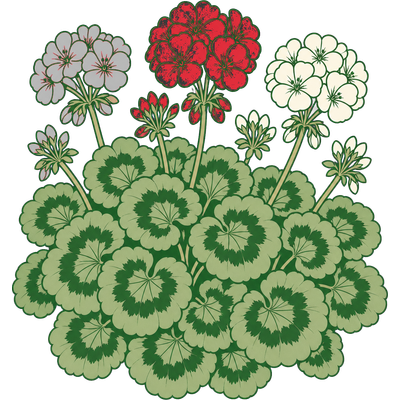
Plant Passport
Geranium
Pelargonium zonale
LightBright
Water7-10d
PetCheck
PP PELA RGON IUMZ
Issued 2026 · Valid while cared for
Geranium
Pelargonium zonale
Also known as Pelargonium × hortorum, Geranium zonale
“Give me the sunniest spot you have and I'll flower until the frost tells me to stop.”
floweringbalcony friendlydrought tolerantbeginner friendlyfast growing
- Light
- Bright light
- Water
- Let dry between waterings
- Pet safety
- Mildly toxic
- This month
- Finish the strongest growth flush with one more light feed. Review support or pruning needs for the bushy shape before tired leaves hide pests Cue: Rounded.
August care tip
Finish the strongest growth flush with one more light feed. Review support or pruning needs for the bushy shape before tired leaves hide pests Cue: Rounded.
Quick Care Summary
- Light
- Bright light
- Water
- Let dry between waterings
- Placement
- Full sun on a balcony, terrace or south-facing windowsill. More sun means more flowers.
- Temperature
- 5–30°C
- Humidity
- low
Free printable Plant Passport card
Print, cut, and place this Geranium card in the pot. Add the physical card if you want the finished version.
Printable card preview
Compare the simple formats before you download the free card or add a finished card above.
Plant Passport
Geranium
LightBright
Water7-10d

Botanical stake card
- Format
- 150 x 25mm
- Best for
- Slim plant stakes and gift pots
Use the card section above when you are ready to download or add a printed card.
Protect the printed card
Waterproof badge holders keep the free printable card readable through every watering.
View holders →Detailed Care Guide
Watering Method
Water at the base until it drains, keeping the leaves dry. Let the top 3-4 cm dry out between waterings; in a hot summer that can mean daily for small pots.
Soil Mix
Standard potting soil with extra perlite or sand for drainage; a handful of clay granules at the pot base helps.
Repotting
Refresh the soil each spring when it comes out of overwintering; pot up only when roots fill the container.
Pruning
Deadhead spent flower stalks weekly in season. In early March, cut overwintered plants back by half to just above a node.
Pot Preference
Terracotta or any pot with generous drainage holes; balcony boxes work well with 20 cm spacing between plants.
Fertilizing
Feed weekly to fortnightly from May to September with a high-potassium (tomato-type) fertilizer to keep the flowers coming. No feeding while overwintering.
Draft Sensitivity
Wind-tolerant once established — fine on exposed balconies. Cold night draughts below 5 °C end the season.
Sources consulted
- www.rhs.org.uk
- www.aspca.org
- www.missouribotanicalgarden.org
Room Placement
Window Direction
South-facing outdoors. For overwintering, any bright window in a cool room.
Best Room
Indoors only while overwintering: a cool, bright spot at 5-10 °C such as an unheated hallway or garage window.
Monthly Care Calendar
Aug (now)
Finish the strongest growth flush with one more light feed. Review support or pruning needs for the bushy shape before tired leaves hide pests Cue: Rounded.
Sep
Start reducing fertilizer and stretch watering as nights cool. Move Geranium closer to the brightest indirect position before autumn light drops Cue: Rounded.
Oct
Stop feeding and prepare for heating season. Keep temperature steady and avoid cold drafts Cue: Rounded.
Nov
Winter risk check: test soil before watering, inspect rounded, and keep the pot draining freely while growth slows Cue: Rounded.
Watering Schedule
- Summer
- Every 2 days
- Winter
- Every 21 days
Feel the top 3-4 cm of soil; water when dry. In overwintering, water only enough to stop the stems shrivelling.
Common Problems
Propagation
stem cuttings in soileasylate-summer
In August or September, cut 8-10 cm tips below a node, remove the lower leaves, let the cut dry for a few hours, and stick them in barely moist sandy soil. Rooted cuttings overwinter on a cool windowsill and flower the next summer.
Pests & Diseases
Grey mould (Botrytis)
Early signs
Fuzzy grey coating on spent flowers and leaves in damp weather.
Treatment
Remove all affected material promptly, deadhead weekly, and improve air circulation around the plants.
Whitefly
Early signs
Tiny white insects flying up from the undersides of leaves when disturbed.
Treatment
Hang yellow sticky traps and spray with insecticidal soap; repeat weekly until clear.
Buying Tips
Buy compact plants with many unopened buds rather than full bloom, and check stem bases for black rot. Available everywhere from late April.
Frequently Asked Questions
Fun Facts
What everyone calls a geranium is botanically a Pelargonium — true geraniums are hardy garden cranesbills. The Dutch balcony tradition is over a century old, and scented-leaf relatives flavour cakes and syrups.
Origin & Natural Habitat
Native to rocky slopes of South Africa's Cape region — which explains the love of sun and the hatred of wet feet.
Plants with similar care
Want cards for more plants?
Move from one free card to a ready-to-use set.