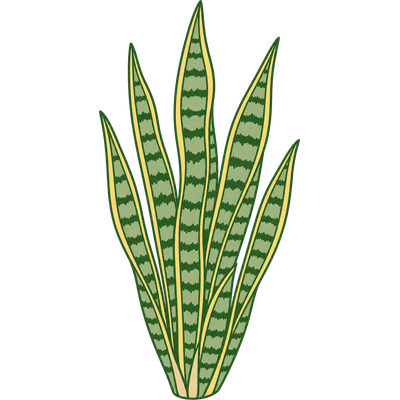
Plant Passport
Snake Plant
Sansevieria trifasciata
LightBright
Water7-10d
PetCheck
PP SANS EVIE RIAT
Issued 2026 · Valid while cared for
Snake Plant
Vrouwentong
Sansevieria trifasciata
Also known as Dracaena trifasciata
“Forget me for weeks, I will still look fabulous.”
air purifyinglow maintenancebeginner friendlyoffice plantdrought tolerantshade tolerant
- Light
- Low light
- Water
- Let dry between waterings
- Pet safety
- Mildly toxic
- This month
- Continue summer routine. Check soil moisture before watering. Last good month for propagation.
August care tip
Continue summer routine. Check soil moisture before watering. Last good month for propagation.
Quick Care Summary
- Light
- Low light
- Water
- Let dry between waterings
- Placement
- Tolerates low light but grows best in bright indirect light. Handles direct morning sun well.
- Temperature
- 10–30°C
- Humidity
- low
Free printable Plant Passport card
Print, cut, and place this Snake Plant card in the pot. Add the physical card if you want the finished version.
Printable card preview
Compare the simple formats before you download the free card or add a finished card above.
Plant Passport
Snake Plant
LightBright
Water7-10d

Botanical stake card
- Format
- 150 x 25mm
- Best for
- Slim plant stakes and gift pots
Use the card section above when you are ready to download or add a printed card.
Protect the printed card
Waterproof badge holders keep the free printable card readable through every watering.
View holders →Detailed Care Guide
Watering Method
Water the soil directly, avoiding getting water between the leaves as this can cause rot. Water thoroughly until it drains, then let the soil dry completely before watering again.
Soil Mix
Fast-draining succulent or cactus mix. Alternatively: 2 parts potting soil, 1 part perlite, 1 part coarse sand. Good drainage is essential.
Repotting
Every 2-3 years or when the pot is overcrowded. Snake Plants prefer being slightly root-bound. Use a heavy, wide pot to prevent toppling.
Pruning
Minimal pruning needed. Remove damaged or dead leaves at the soil line with a clean, sharp knife. Do not cut leaf tips as this creates permanent scarring.
Pot Preference
Heavy ceramic or terracotta pot with drainage hole. The weight prevents the top-heavy plant from tipping. Terracotta helps soil dry faster, reducing rot risk.
Fertilizing
Feed once a month during spring and summer with a cactus or general-purpose fertilizer at half strength. No fertilizer needed in autumn and winter.
Draft Sensitivity
Tolerates most conditions but avoid prolonged exposure to temperatures below 10 degrees C. Cold drafts can cause brown, mushy patches on leaves.
Sources consulted
- www.rhs.org.uk
- www.aspca.org
- www.missouribotanicalgarden.org
Room Placement
Window Direction
Any window direction works. Grows fastest near an east or west window. Tolerates north-facing or even windowless rooms with artificial light.
Best Room
Thrives virtually anywhere indoors: living room, bedroom, bathroom, hallway, or office. Excellent for bedrooms due to nighttime oxygen release.
Monthly Care Calendar
Aug (now)
Continue summer routine. Check soil moisture before watering. Last good month for propagation.
Sep
Growth begins to slow. Reduce watering frequency. Stop fertilizing at the end of the month.
Oct
Transition to winter care. Water less often. Move away from cold windows as temperatures drop.
Nov
Winter mode. Water very sparingly. The dry indoor air is actually fine for Snake Plants. No fertilizer.
Watering Schedule
- Summer
- Every 18 days
- Winter
- Every 30 days
Insert your finger or a wooden stick deep into the soil. Only water when the soil is completely dry all the way through. If in doubt, wait a few more days.
Common Problems
Propagation
leaf cuttingdivisioneasyspring
Division is the easiest method: separate pups with roots from the mother plant during repotting. Leaf cuttings also work: cut a leaf into 5-8 cm sections, let them callus for a day, and insert upright into moist cactus mix. Note: variegated cultivars lose their edge variegation when propagated from leaf cuttings — use division instead.
Pests & Diseases
Mealybugs
Early signs
White cottony patches in leaf crevices, especially at the base
Treatment
Remove with a cotton swab dipped in rubbing alcohol. Repeat weekly for 3 weeks to catch all life stages.
Root rot (Fusarium)
Early signs
Mushy, dark brown base of leaves with an unpleasant smell
Treatment
Remove affected leaves and roots. Repot in fresh dry soil. Do not water for at least a week. In severe cases, propagate healthy leaf sections.
Spider mites
Early signs
Fine webbing and tiny yellow dots on leaves, usually in dry conditions
Treatment
Wipe leaves with a damp cloth. Apply neem oil spray. Increase air circulation.
Buying Tips
Check the base of the leaves for soft spots — this indicates root rot. Leaves should be firm and upright. Check for mealybugs in the crevices between leaves. Choose a plant with at least 4-5 leaves.
Frequently Asked Questions
Fun Facts
Snake Plants perform a rare type of photosynthesis called CAM (Crassulacean Acid Metabolism), opening their stomata at night instead of during the day to conserve water. This means they release oxygen at night, making them one of the few plants that improve bedroom air quality while you sleep. In Nigeria, the plant is associated with the god of war and is used in protective rituals.
Origin & Natural Habitat
Native to tropical West Africa, from Nigeria to the Congo. Grows in rocky, dry areas and on forest edges. Adapted to survive drought through water storage in its thick leaves and underground rhizomes.
Plants with similar care
Want cards for more plants?
Move from one free card to a ready-to-use set.